
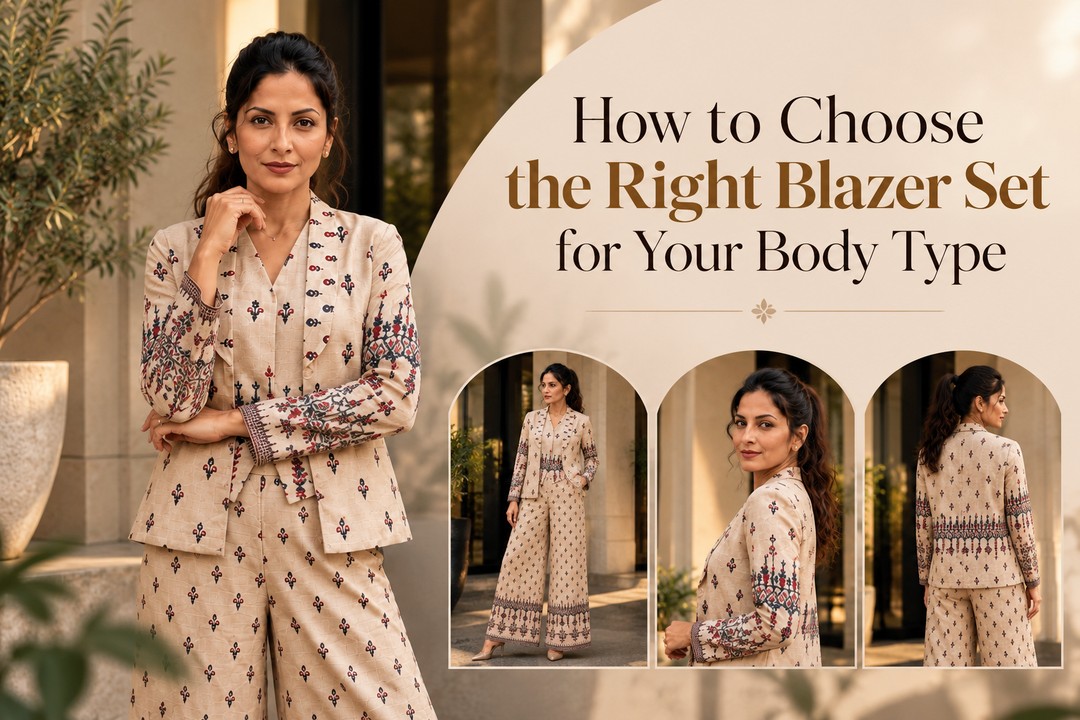
Choosing a women’s blazer set that truly suits you is one of the smartest wardrobe decisions you can make, and understanding blazer fit for women is where every good decision begins. After more than twenty years of writing about clothes and the women who wear them, I can tell you that the blazer set is the one piece that can make a person look polished, powerful and completely like herself, but only when the cut agrees with the body underneath it.
Here is the part nobody tells you in a hurry. A blazer set is not simply a jacket with matching bottoms. It is a small piece of architecture, and architecture works when proportion is respected. If you are ready to explore options while you read, you can browse the women’s blazer set collection and keep a few pieces in mind as we go. You can also visit the Baivee homepage to see how the brand thinks about modern, wearable fashion.
Let me be honest about something before we begin. There is no such thing as a “flattering” blazer in the abstract. There is only a blazer that is flattering on you, on your shoulders, your waist, your hips, your height and the way you like to move through a day. This guide is built to help you find that blazer, and to help you do it with clarity instead of guesswork.
Why the Blazer Set Deserves Your Attention
Think about how many times you have stood in front of a mirror, pulled on a blazer and felt something was slightly off. The sleeves sat awkwardly. The button strained. The shoulders looked borrowed. That feeling is almost never about your body being wrong. It is about the garment being wrong for your shape.
A blazer set solves a problem that mix and match dressing often creates. When the jacket and the bottoms are cut together, the proportions are already in conversation. The length of the blazer relates to the rise of the trouser or the hem of the skirt. The shoulder line relates to the leg line. That is why a well chosen blazer pants set or blazer skirt set tends to look more intentional than two separate pieces bought on different days.
There is also the practical side. A set gives you at least three outfits in one purchase. You can wear the full look for a meeting, the blazer alone over a dress, and the bottoms with a simple top on a relaxed weekend. For anyone building a thoughtful wardrobe, that kind of value is hard to ignore.
Start With Honest Measurements, Not Dress Sizes
Before you think about silhouettes or colours, measure yourself. I know it sounds dull, but it is the single most useful thing you can do. Dress sizes vary from brand to brand, sometimes by a full size or more, so a number on a label tells you very little.
You need five measurements. The first is your shoulder width, taken from the edge of one shoulder bone to the other across your back. The second is your bust at its fullest point. The third is your natural waist, the narrowest part of your torso. The fourth is your hip at the widest point. The fifth is your arm length from the shoulder tip to the wrist bone.
Keep these numbers in a note on your phone. When you read a size chart, compare your shoulder and bust first, because those are the two areas a blazer cannot forgive. A blazer can be taken in at the waist by a tailor. It can be shortened at the sleeve. But a blazer that is too narrow across the shoulders will never sit right, no matter how much money you spend on alterations.
The Anatomy of a Good Fit
Let me walk you through what a correct blazer fit for women actually looks like, because once you know the checkpoints you will never shop the same way again.
The shoulders. The seam should sit exactly where your shoulder ends and your arm begins. If the seam droops toward the arm, the blazer is too big. If it pulls up toward your neck, it is too small. This is the one area where you should not compromise.
The chest and closure. Fasten the top button. You should see a gentle, clean line, not horizontal wrinkles pulling outward from the button. Those pull lines are the clearest sign that the blazer is too tight across the bust.
The sleeves. The cuff should end at your wrist bone, with a small glimpse of your shirt cuff or wrist showing. Sleeves that swallow your hands make you look smaller and less sure.
The length. A classic blazer should cover the top of your hip or sit around the middle of it. Cropped blazers sit at or above the natural waist, and long women blazer styles fall to the mid thigh or even the knee. Each length has a job, and we will come to that shortly.
The back. Look at yourself from behind. The fabric should lie smooth, without pulling across the shoulder blades or bunching under the collar.
If you can check all five of these, you have found a fitted blazer womens wardrobes are made of. If one or two are off, ask whether a tailor can fix them. Sleeves and hems are easy. Shoulders are not.
Understanding Your Body Shape Without Boxing Yourself In
Body shape categories are a useful starting point, but please treat them as a compass and not a cage. Most real bodies sit somewhere between two shapes, and your shape can shift over the years. Use the categories below to learn the logic of proportion, then trust your own mirror.
Pear Shape: Balance the Hips With Structure Up Top
If your hips are wider than your shoulders and your waist is defined, you are what most guides call a pear shape. The goal is to bring visual weight to the upper half so the whole silhouette feels even.
Look for blazers with structured shoulders, a gentle shoulder pad or a crisp padded line. Double breasted blazers are excellent here, because the overlapping panels and two rows of buttons add width across the chest. A blazer that ends just at the hip bone or slightly below tends to work well, as it skims the widest part without clinging to it.
For the bottom half, a blazer pants set in a straight leg or a softly flared cut is your friend. Avoid very tapered trousers that emphasise the hip and then shrink at the ankle. If you prefer a skirt, choose a blazer skirt set with an A line or a gently flared shape that moves away from the body.
Colour can help too. A lighter or more detailed blazer on top paired with a deeper tone below draws the eye upward. A black womens blazer over a slightly lighter bottom can reverse that effect, so choose according to what you want to highlight.
Apple Shape: Create Length and Easy Definition
If you carry more weight around the midsection and have slimmer legs, you may be an apple shape. Your best features are often your legs, your décolletage and your arms, and a clever blazer set will celebrate them.
The most flattering cut is usually a longer, single breasted blazer that falls past the hip and skims the waist without clinging. The vertical line created by an open front elongates the torso. A wrap blazer can be particularly kind, because the diagonal line draws the eye along the body instead of across it.
Choose a V shaped or deep notch lapel to open up the neckline. Avoid heavy double breasted styles with many buttons across the stomach, since they can add bulk where you may not want it. Fabrics with some drape, such as crepe, a good viscose blend or a soft woven, fall better than stiff, boxy cloths.
For the bottom half, a straight or slightly wide leg trouser shows off your legs and balances the volume above. A blazer skirt set with a midi length skirt can also look wonderful, especially when the blazer is worn open.
Hourglass Shape: Honour the Waist
If your bust and hips are closely matched and your waist is clearly narrower, you have an hourglass shape. The trap here is hiding the waist inside a boxy cut, so look for blazers that follow your curves.
Nipped waist blazers, princess seams and single breasted styles with a cinched back are ideal. A fitted blazer womens collections often feature will usually suit you better than a relaxed one. A belt over the blazer, or a wrap closure, adds even more definition.
Be careful with shoulder pads that are too dramatic, since they can tip the balance and make you look top heavy. Choose moderate structure. For bottoms, high waisted blazer pants or a pencil style blazer with skirt combination echo the line of the waist and keep the shape harmonious.
If you love a double breasted look, choose one with a defined waist and a slightly longer hem, so the buttons do not overwhelm your frame.
Rectangle Shape: Build Curves With Clever Cuts
If your shoulders, waist and hips are close in width, you may be a rectangle shape. This is often described as athletic or straight, and it has its own advantages. You can wear almost anything, but the question is how to add shape if you want it.
Peplum style blazers, belted blazers and styles with a structured hip detail create the illusion of curves. A cropped blazer outfit works beautifully here, particularly when paired with high waisted trousers that make the waist look smaller. Double breasted blazers also help, because the layered front adds dimension to the chest.
If you prefer a clean, minimal look, choose a boxy, oversized cut in a textured fabric like tweed or a woven blend. The structure becomes the statement, and you wear it with relaxed confidence.
Inverted Triangle Shape: Soften the Shoulders
If your shoulders are broader than your hips, you may be an inverted triangle. Here the aim is to soften the upper body and add a little volume lower down.
Choose blazers with softer, natural shoulders and avoid heavy padding. Single breasted styles with a deeper V neckline reduce the horizontal emphasis across the chest. A longer blazer line helps too, since it draws the eye down.
Pair them with wide leg trousers, flared pants or a fuller skirt in a blazer pants set or blazer and skirt combination. The extra volume at the hip balances the shoulders and creates a lovely, fluid shape.
Petite Frames: Keep Proportions Tight
Petite women, usually under five feet four inches, need to guard against being overwhelmed by fabric. A blazer that is too long can swallow your legs, and a heavy cloth can feel like wearing a costume.
Choose a blazer that ends at or just below the hip, with a slim, structured shoulder. A cropped blazer outfit with high waisted bottoms is a petite woman’s best friend, because it lengthens the legs. Monochrome sets, in which the jacket and bottoms match in colour, create an unbroken vertical line that makes you look taller.
Keep the lapels narrow to medium and the buttons small. Large details can dominate a petite frame.
Tall Frames: Use Your Length With Confidence
If you are tall, you can carry long women blazer styles that would overwhelm others. A blazer that falls to the mid thigh looks sophisticated and intentional on you. Double breasted blazers with a full row of buttons also suit a long torso beautifully.
The thing to watch is sleeve length, since many readymade blazers are cut for average arms. Check this before you buy, and consider asking a tailor to lengthen if there is enough fabric in the hem.
Plus Size Frames: Comfort, Structure and Respect for Curves
Let me say this plainly. A plus size blazer set should be designed for your body, not simply scaled up from a smaller pattern. That means correct bust darts, shoulder width, sleeve circumference and a rise that sits comfortably on the waist.
When you shop for a plus size blazer set, look for fabrics with a little stretch and a good weight, such as stretch crepe, ponte or a quality cotton blend. They hold their shape and move with you. Avoid fabrics that cling or wrinkle heavily.
The most flattering cuts are usually single breasted or wrap styles that end at the upper thigh, with a slightly nipped waist and a clean lapel. A longer line creates a graceful vertical effect. If you love a double breasted look, choose one with a longer hem and a defined waistline, so the buttons sit flat and the silhouette feels intentional.
A word on colour. Black, navy, deep green, burgundy and rich neutrals look wonderful, but so do softer tones like sand, dusty rose or ivory. Do not let anyone tell you that curves must hide in dark colours. Choose what makes you feel brilliant.
Blazer Types and Silhouettes: A Plain Language Guide
Now that you know your shape, let us decode the vocabulary. Understanding blazer types will help you read product pages and tell a salesperson exactly what you want.
Single breasted. This has one row of buttons and a narrow overlap at the front. It is the most versatile style, and a blazer single breasted cut suits nearly every body type. It looks clean, slimming and appropriate for any setting.
Double breasted. This has two rows of buttons and a wider overlap. Double breasted women’s blazer styles feel more formal and fashion forward. They add structure and presence, which is wonderful for pear and rectangle shapes, but they need careful handling on fuller midsections.
Wrap blazer. This closes with a tie or a overlapping flap and no traditional buttons. It is soft, flexible and often adjustable, which makes it a gift for apple and plus size frames.
Cropped blazer. This ends at or above the waist. It is the perfect partner for high waisted bottoms, particularly for petite and hourglass shapes.
Oversized blazer. This is cut generously, with dropped shoulders and a relaxed hem. It reads as modern and effortless, and it suits rectangle and tall frames best.
Long line blazer. This falls to mid thigh or beyond. It elongates the body and offers a graceful, almost coat like effect. It is excellent for apple, inverted triangle and tall figures.
Tuxedo style blazer. This features satin lapels and a sleek shape. It is the natural choice for evening and party wear.
Blazer dress. A womens blazer dress is a jacket extended into a dress, usually belted at the waist. It works for any frame when the length and the waist definition are right.
Knowing these categories means you can describe exactly what you are looking for. When you are scrolling through fashion blazers for ladies, you will recognise instantly which styles belong in your shortlist and which you can skip.
Choosing the Right Bottom Half for Your Set
The blazer gets the attention, but the bottoms decide whether the set works. Let me guide you through the main options.
Blazer pants set. This is the classic. Straight leg trousers suit nearly everyone. Wide leg pants balance a broad shoulder and a fuller hip. Tapered trousers suit slim figures and tall frames. Flared trousers elongate the leg and look fantastic on petite women when worn with a heel.
Blazer skirt set. A blazer with skirt can feel graceful and distinctly feminine. A pencil skirt follows the curves of an hourglass shape. An A line skirt moves away from a fuller hip. A midi skirt works beautifully on apple shapes and tall women. A pleated skirt adds movement and suits rectangles who want more curve.
Blazer and shorts. For warm weather or a fashion forward day, tailored shorts with a matching blazer can look wonderfully modern. Keep the fit clean and the length around mid thigh.
Mix and wear. Because the pieces are designed together, a set also lets you wear the blazer with jeans and the trousers with a plain tee. That flexibility makes it far more economical than buying single pieces.
Fabric: The Silent Decider of Fit
Many women choose a blazer by colour and cut and ignore fabric, then wonder why a perfectly sized piece looks stiff or wrinkled. The cloth matters just as much as the pattern.
Crepe drapes beautifully, resists wrinkles and suits nearly every body type. It is my first recommendation for anyone who wants a polished, easy care set.
Wool blend gives you structure and warmth. It suits colder months and formal environments, and it holds a sharp line. Be careful of heavy wool in warm climates.
Linen and linen blend feel breezy and relaxed, ideal for summer and casual blazer outfits. They wrinkle easily, which can be part of the charm, but they need to be chosen with that in mind.
Cotton and cotton blend are breathable and versatile. A cotton blazer with a little stretch is excellent for plus size frames and everyday wear.
Tweed adds texture and visual interest, and it is wonderful for rectangle shapes that want to add dimension. It can add bulk, so choose a lightweight version if you are fuller around the midsection.
Satin and silk blend shine and feel luxurious. They are best for evening and party wear, and they require careful fit, since they show every lump and line.
Stretch fabrics such as ponte or scuba keep their shape and move comfortably, making them practical for long workdays and travel.
A simple rule of thumb: the fuller your figure, the more important it is to choose a fabric with weight and drape, not one that is thin or clingy. And the more petite your frame, the more careful you should be with heavy or bulky cloth.
Colour and Pattern: Making the Set Work for You
Colour is the fastest way to change how a blazer set reads on your body. Let me share some principles I have relied on for years.
Monochrome sets create a long, unbroken line. They are ideal for petite frames and anyone who wants to look taller and leaner. A black womens blazer paired with matching trousers is a timeless choice and an essential in any serious wardrobe.
Neutrals such as beige, ivory, camel, grey and navy are flexible and endlessly wearable. They suit every skin tone when chosen with care, and they form the foundation of a capsule wardrobe.
Bold colours like emerald, cobalt, burgundy or fuchsia make a statement and photograph beautifully. If you want to draw attention to the upper body, choose a bold blazer. If you want to draw attention to the legs, choose bold trousers.
Patterns require thought. Small, subtle checks and pinstripes are flattering and professional. Large, loud prints can overwhelm petite frames. Vertical stripes lengthen, while horizontal stripes widen, so use them intentionally.
If you are unsure, choose a mid tone neutral in a good fabric. It will serve you in every season and every setting.
Necklines, Lapels and Details That Change Everything
The smaller details of a blazer have an outsized effect on how it flatters you. Pay attention to them, because this is where good style lives.
Lapel width. Wide lapels add visual weight to the chest and suit broader frames or women who want to add presence. Narrow lapels suit petite women and those who prefer a clean line. Medium lapels are the safest choice for most people.
Notch, peak and shawl. Notch lapels are classic and universal. Peak lapels, which point upward, add sharpness and dramatic shoulders and suit hourglass and pear shapes. Shawl lapels are soft and curved, often used on evening styles.
Neckline depth. A deeper V opens up the chest and elongates the neck, which is excellent for apple, plus size and inverted triangle shapes. A higher closure is more conservative and suits formal settings.
Buttons. One button blazers create a long, slim line. Two button blazers are balanced and classic. Three or more button styles look traditional and can shorten the torso.
Pockets. Flap pockets add width at the hip, which suits slim figures and rectangles. Welt pockets or no pockets give a smoother line and suit pear shapes. If a pocket gaps or puffs, press it flat or have a tailor stitch it closed.
Shoulder pads. Light padding gives a clean, powerful line. Too much looks dated. Choose according to the balance you want.
Choosing a Blazer Set by Occasion
Your body type is one half of the decision. The other half is where you will actually wear the set. Let me show you how to match them.
Blazer for Work
For the office, choose structure and restraint. A classic single breasted blazer in navy, charcoal, black or a soft neutral is the safest, most flattering choice. A blazer pants set in crepe or a good blend keeps you comfortable through long hours. Fit should be clean and slightly fitted, without being tight.
If your workplace is formal, a blazer skirt set at knee length is elegant and appropriate. If it is relaxed, you can soften the look with a lighter fabric or a slightly longer hem.
If you want to see how to keep a work blazer from feeling stiff, read our guide on how to wear a blazer set without looking corporate. It is full of practical ideas for adding personality to even the most structured pieces.
Casual Wear
Casual blazer outfits are about ease. A relaxed fit, a lighter fabric and softer colours create the effect. Pair the blazer with a plain tee and straight leg jeans, or wear the trousers with a simple knit top and sneakers. This is the formula behind the popular blazer and jeans outfit, and it works on every body type when the proportions are right.
For apple shapes, choose a longer blazer open over a fitted tank. For pear shapes, choose a structured blazer with dark, straight leg jeans. For hourglass figures, belt the blazer slightly. For rectangle shapes, try a cropped blazer with high waisted jeans. Ladies blazers to wear with jeans work best when the jeans are not too skinny and the blazer has some structure, so the outfit feels balanced.
If you are wondering what jeans to wear with blazer styles, here is my guidance. Straight leg and bootcut jeans work with almost every blazer length. Wide leg jeans look modern with cropped blazers. Slim jeans pair well with longer, looser blazers. Skinny jeans can work with oversized blazers, though they are the hardest to balance.
Party and Evening Wear
For parties, a blazer set can be unexpectedly glamorous. Choose a blazer for women party wear in satin, velvet or a metallic weave, or a tuxedo style cut with strong lapels. A deep V or a plunging neckline worn without a top underneath is bold and modern.
If you are building a festive look, there is a beautiful set of ideas in our post on 5 ways to style your blazer set for a festive corporate evening. It shows how to move seamlessly from boardroom to celebration with accessories, shoes and a few clever swaps.
Formal Wear
For formal occasions such as interviews, conferences or presentations, a formal wear blazer in a deep neutral, a clean cut and a quality fabric is the right choice. Keep the accessories minimal and let the tailoring do the talking.
The Styling Layer: Making Your Blazer Set Sing
Choosing well is half the work. Styling is the other half, and this is where blazer styling tips make the real difference.
Play with layers. Under a blazer you can wear a crisp shirt, a silk camisole, a fitted knit, a turtleneck or a simple tee. Each creates a different mood. A shirt feels classic, a camisole feels evening ready, and a turtleneck feels polished and modern.
Roll or push the sleeves. Pushing your sleeves to the elbow is an instantly relaxed move that works with most blazer styles. It also shows off your wrist and forearm, which can be flattering.
Wear it open or closed. Open blazers create a long vertical line, ideal for apple shapes and petite women. Closed blazers define the waist and suit hourglass and rectangle shapes.
Add a belt. A slim belt worn over the blazer defines the waist, brings shape to a straight cut and gives a long line blazer a more fitted effect.
Choose the right shoes. Pointed pumps and block heels lengthen the leg and suit nearly every set. Loafers and ankle boots give a relaxed, current feel. Clean white sneakers pair brilliantly with casual blazer outfits.
Accessorise with restraint. A good watch, simple earrings and a structured bag complete a look without competing with it. If your blazer is strongly patterned or boldly coloured, keep jewellery minimal.
Mind the hem. Make sure the blazer does not end exactly at the widest part of your hip. If it does, either choose a shorter or longer length, or open it to avoid emphasising that line.
Common Mistakes to Avoid When Buying a Blazer Set
Over the years I have seen the same errors repeat, and they are almost all avoidable.
Buying by size label alone. As I said, sizes vary. Always check measurements.
Ignoring the shoulder line. If the shoulders do not fit, nothing else will rescue the blazer.
Choosing a blazer that is too tight. A blazer should allow you to move your arms, raise your hands and sit comfortably. If it pulls across the back when you reach forward, it is too small.
Choosing a blazer that is too big in the hope of looking effortless. True oversized style is designed that way. A blazer that is simply too large looks like a mistake.
Skipping the tailor. A modest alteration, such as shortening sleeves or nipping the waist, can transform a good blazer into a perfect one. Think of tailoring as part of the purchase price.
Forgetting the rest of your wardrobe. A beautiful blazer set that matches nothing else you own will gather dust. Think about shoes, tops and accessories before you commit.
Following trends blindly. Trends are fun, but a blazer that does not suit your frame will never look right, however fashionable it is. Choose silhouettes that agree with your body, then add trend through colour or accessories.
How to Test a Blazer Set Before You Buy
Whether you shop in a store or online, a few simple tests will protect you from disappointment.
First, the hug test. Cross your arms in front of you. If the back feels like it is about to tear, the shoulders are too tight.
Second, the reach test. Lift both arms forward and then overhead. The blazer should not ride dramatically up your back or dig into your underarms.
Third, the sit test. Sit down with the blazer buttoned. The button should not strain, and the waistband of your trousers should sit comfortably.
Fourth, the photo test. Take a photograph of yourself from the front, side and back. Cameras are honest, and they help you spot bulges, pulling and uneven hems you may miss in a mirror.
Fifth, the walk test. Move around for a few minutes. A set that looks perfect while standing still but feels awkward when you walk will not survive real life.
For online shopping, read the size chart carefully, compare it with your own measurements, and check the fabric composition and the return policy. A clear policy means you can try the set at home without pressure.
Building a Capsule of Blazer Sets
If you are just starting out, you do not need ten blazer sets. You need two or three thoughtfully chosen ones.
Your first set should be a classic neutral, such as black, navy or charcoal, in a single breasted cut. It will carry you through work, interviews and dressier events. A black womens blazer set is the traditional foundation, and it will earn its place season after season.
Your second set should be a softer, more versatile tone, such as beige, ivory, sage or camel, in a slightly more relaxed cut. This is your casual and weekend set, wonderful with jeans and sneakers.
Your third set can be your personality piece, in a bold colour, a textured fabric or a statement cut like a double breasted or cropped style. This is the one that makes you smile every time you wear it.
With these three, you have dozens of outfit combinations, and every one of them was chosen with your body in mind.
Caring for Your Blazer Set So It Keeps Its Shape
A good blazer deserves good care. Hang it on a wide, shaped hanger so the shoulders keep their form. Avoid wire hangers, which distort the cloth. Steam instead of pressing whenever you can, and always follow the care label on the garment.
Dry clean sparingly, since too much cleaning wears down the structure of the fabric. Spot clean small marks and air the blazer after wearing it. Store your sets with breathing room, not crammed into a tight wardrobe where the lapels crush.
If you wear your blazer set often, a seasonal visit to a tailor for small adjustments will keep it feeling fresh. A button that loosens, a hem that drops or a seam that frays is easier to fix early.
Frequently Asked Questions About Choosing a Blazer Set
What is the best blazer for women with a wide hip?
A structured blazer that ends just at or slightly below the hip bone, with defined shoulders, balances a wider lower half beautifully. Pair it with straight leg or flared trousers in the same set.
Which blazer suits an apple shaped body?
A longer, single breasted or wrap blazer with a deep V lapel and drapey fabric is the most flattering. Worn open, it creates a long vertical line and skims the midsection.
Can plus size women wear double breasted blazers?
Yes, when the cut is right. Choose a double breasted style with a longer hem, a defined waist and flat buttons, in a fabric with some drape. A well designed plus size blazer set will make this style look elegant.
What blazer length is best for short women?
A cropped blazer or one that ends at the upper hip, paired with high waisted bottoms, lengthens the legs and keeps proportions balanced.
Are fitted blazers or relaxed blazers better?
It depends on your body and your mood. Fitted styles define the waist and suit hourglass and rectangle shapes. Relaxed styles feel modern and suit tall, rectangle and inverted triangle frames. Both can be flattering when the shoulders fit well.
How should a blazer fit across the shoulders?
The shoulder seam should sit at the end of your shoulder bone. This is the one fit point that is nearly impossible to alter, so check it first.
What can I wear under a blazer set?
A silk camisole, a fitted tee, a crisp shirt, a knit top or a turtleneck all work. Match the layer to the occasion and the mood of the outfit.
How do I style a blazer and jeans outfit?
Choose a blazer with some structure, pair it with straight leg or wide leg jeans, add a simple top and finish with loafers, ankle boots or clean sneakers.
Is a blazer skirt set suitable for work?
Absolutely. A knee length or midi skirt with a matching blazer is professional, elegant and comfortable, especially in a crepe or wool blend fabric.
How many blazer sets should I own?
Two or three well chosen sets are enough to cover work, casual wear and special occasions.
A Quick Reference: Which Blazer Set for Which Body Type
Here is a simple summary you can save for your next shopping trip.
If you are a pear shape, choose structured shoulders, a double breasted or padded blazer, and straight or flared bottoms.
If you are an apple shape, choose a long, single breasted or wrap blazer with a deep V neckline and drapey fabric.
If you are an hourglass, choose a nipped waist, single breasted cut and high waisted bottoms.
If you are a rectangle, choose peplum, belted or cropped styles that build curves, or embrace a boxy, textured cut.
If you are an inverted triangle, choose soft shoulders, a deep V neckline and wide leg or flared bottoms.
If you are petite, choose cropped or hip length blazers, slim lapels and monochrome sets.
If you are tall, choose long line or double breasted styles, and check sleeve lengths.
If you are plus size, choose structured yet stretchy fabrics, longer lines and a cut designed for curves.
Final Thoughts: Dress the Woman You Are
After all these years of watching women try on clothes, the most important thing I have learned is this. The best blazer set is not the most expensive, the most fashionable or the one a stylist swears by. It is the one that makes you stand a little taller the moment you put it on.
Understanding your shape, your measurements, your fabric preferences and your daily life gives you the tools to choose with confidence. Start with fit, because fit is the foundation. Add the right silhouette, the right fabric and a colour you love, and the rest becomes easy. And remember that a blazer set is an investment in how you feel, not only in how you look.
If you have questions about sizing, fit or choosing the right set for your frame, our team is always happy to help. Feel free to get in touch with us, and we will guide you toward the piece that was made for you.