


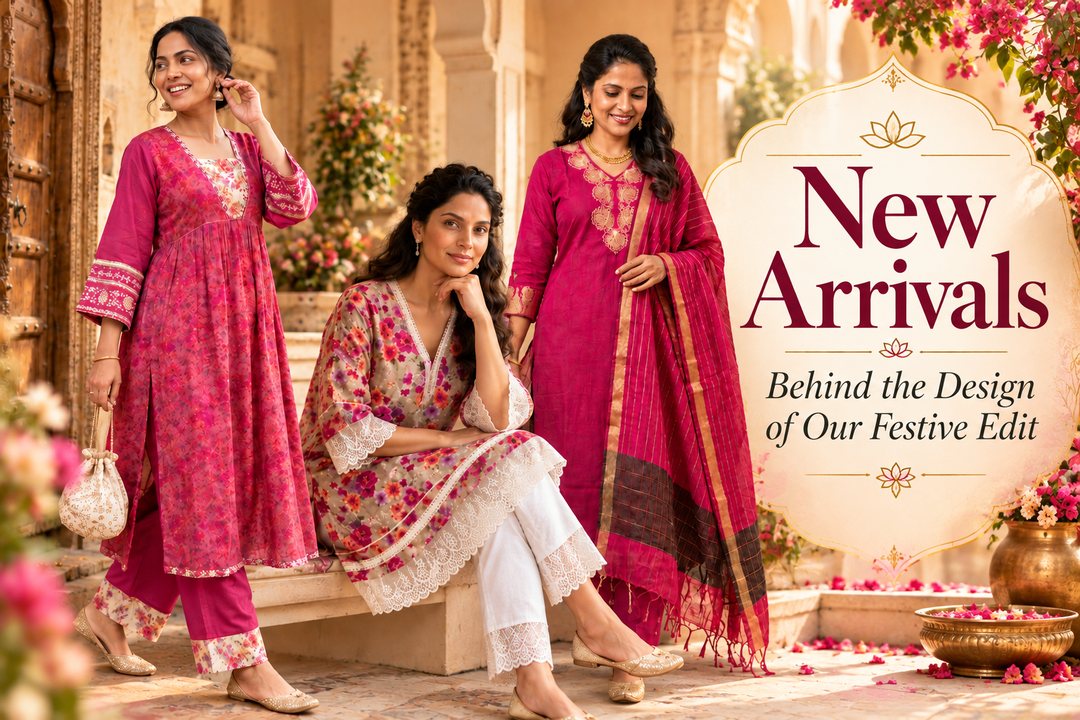
Festive wear for women is never designed in a single afternoon, and our festive collection is the proof. Behind every kurta, every suit set and every lehenga in this season's new arrivals clothing edit, there are months of conversations, sketches, swatches, fittings and honest rewrites. This is the story of how it all came together, told the way a designer would tell it to a friend over a long cup of chai.
If you have ever wondered why one festive outfit for women feels effortless while another sits awkwardly on the body, the answer almost always lies in decisions you never see. As you read, feel free to browse the full shop to picture every piece we mention, and visit the Baivee homepage to understand the larger philosophy that shapes each edit. Both are only a click away, and both will make the rest of this story easier to imagine.
Where a Festive Edit Really Begins
People assume that a festive edit starts with a mood board full of gold and glitter. In truth, ours began with a notebook full of questions. What did women wear last season and actually love? What stayed folded in the cupboard? Which outfits were worn once and which were worn five times? Those answers shaped everything that followed, because a festive wardrobe that cannot be worn again is not a wardrobe, it is a costume.
Only after that listening phase did we turn to the latest fashion trends. Trend research is a bit like reading weather reports. You do not copy the forecast, you simply dress sensibly for it. We studied the current clothing trends on runways, in street style, in wedding photographs and in the quiet habits of our own customers. We noticed that the new fashion trends this year lean towards softness: fluid drapes, relaxed fits, muted embroidery and colours that feel lived in rather than loud.
A good designer also knows when to ignore a trend. A new fashion style is only worth adopting if it flatters real bodies and survives real celebrations, where you sit on the floor for puja, eat with your hands, hug fifty relatives and dance until your feet protest. So every idea in our sketchbook faced a simple test: will she feel comfortable, confident and beautiful at hour six of the evening, not just at minute one?
That test is why the final edit feels cohesive. It is not a pile of random pieces. It is a thoughtful answer to how women actually celebrate today, and it set the tone for every design decision you will read about in the sections ahead.
Designing for the Woman Who Wears It
If there is one thing twenty years in this industry teaches you, it is that clothes are never really about clothes. They are about the woman inside them. The woman we design for is educated, earning, independent and proud of her roots. She does not want to choose between who she has become and where she comes from. She wants a modern Indian outfit that respects both.
That belief shapes how we approach women's ethnic wear. Tradition is not a museum to us, it is a living language, and our job is to help her speak it fluently in her own voice. Ethnic wear should never feel like a uniform. It should feel like a choice, one she makes freshly every time she opens her wardrobe.
So our team spent weeks in conversation with tailors, pattern makers and artisans who have worked with Indian textiles for decades. We asked them what happens to a sleeve when someone raises her arms to light a diya. We asked how a neckline behaves when she bends to touch an elder's feet. Ethnic clothing that ignores movement looks lovely on a hanger and miserable at a celebration, so we let movement lead the design.
There is also the matter of restraint. Many people believe that festive means excess, but we believe the real celebration lies in restraint: a fine border instead of a heavy one, a single beautiful motif instead of a crowded canvas, a drape that does the talking so the embellishment does not have to. That quiet confidence runs through the whole edit, and it is what makes each piece feel luxurious without ever shouting.
The Colour Story: Pink, Magenta, Purple and Quiet White
Colour is the first thing you notice and the last thing you forget, so we treat it with real respect. Our palette began with the flowers and spices of the season: marigold petals, rose syrup, saffron, jamun. From there we asked how each shade would look in daylight, under warm festive lights and in photographs, because every outfit will be photographed at least a hundred times.
The pink suit set became an early favourite in the studio. We tested a dozen pinks, from the pale blush of a sugar candy to the deeper tone of a ripe watermelon, before settling on shades that flatter many skin tones. Pink gets unfairly labelled as playful, but in the right fabric it feels graceful and sophisticated, perfect for a daytime puja or a family lunch.
For evenings, we leaned into richer jewel tones. The magenta suit set is bold without being brash, and it photographs beautifully against lamps and fairy lights. A purple salwar suit, meanwhile, offers a royal calm. Purple has long carried a sense of ceremony in Indian dress, and we chose a plum leaning shade that looks elegant with both gold and silver jewellery.
And then there is white. White kurtis may not sound festive at first, but anyone who has styled them knows better. A crisp white kurta with delicate embroidery becomes a canvas for statement earrings, a bright dupatta or a heavy bangle stack. It also stays cool in warm weather and forgives long hours of celebration. We kept a few white pieces in the edit precisely because they make everything around them look more beautiful.
Fabric First: Why Cotton Still Rules the Festive Season
Before we sketch a single line, we hold the fabric in our hands. Fabric decides how a garment falls, how it breathes and how it ages, and no amount of clever design can rescue a poor choice. This is why so much of our edit begins with cotton.
A cotton salwar suit is one of the most underrated festive choices. It is breathable, soft and gentle on skin, which matters enormously when you are wearing the same outfit from morning rituals to late dinners. Cotton also takes embroidery, block prints and dyeing beautifully, so it can look as refined as it feels comfortable. For celebrations that stretch across a whole day, nothing else comes close.
We pay particular attention to pure cotton kurtis, because the word pure matters. A blend can feel perfectly fine in a shop and then trap heat by the second hour. Pure cotton lets air move, absorbs moisture and softens with every wash. Women often tell us that their favourite cotton kurtis are the ones they have owned the longest, and that is exactly the kind of loyalty we design for.
Of course, cotton is not the only story. We also work with fine silks, chanderi, georgette and soft blends for pieces that need extra drape or sheen. But the principle stays the same across the edit: kurtis for women should feel as good against the skin as they look in the mirror. If the fabric fails the comfort test in our studio, it does not make it to the shop floor, no matter how pretty the swatch looks.
Silhouettes That Move: Anarkali, Kurti Dress and Short Kurtis
Silhouette is the architecture of an outfit. Get it right and even a simple fabric feels special. Get it wrong and the loveliest embroidery cannot save the look. This season we explored several shapes, each chosen for a specific kind of celebration.
The anarkali salwar suit remains the queen of festive silhouettes, and for good reason. The fitted bodice and flowing flare create a graceful line that moves beautifully when you walk or dance. We adjusted the flare on our versions so it feels dramatic without becoming heavy, because nobody wants to carry five metres of fabric through a crowded living room. Paired with a soft dupatta, an anarkali kurta set with dupatta delivers old world grace in a form that suits a modern schedule.
For women who prefer a cleaner line, the kurta pant set with dupatta is the quiet hero. Straight pants, a well cut kurta and a lightweight dupatta create a polished look that works from a morning puja to an evening get together. It is easy to move in, easy to accessorise and easy to wear again in a different mood.
Then there is the kurti dress, a favourite for younger customers and anyone who loves a relaxed festive look. A longer length gives it the presence of a dress while keeping the familiar comfort of a kurta. Short kurtis, on the other hand, are the playful sibling. They pair wonderfully with palazzos, skirts and straight pants, and they make dressing for casual festive gatherings delightfully quick. Having both lengths in the edit meant every woman could find a shape that matched her own idea of celebration.
Prints, Florals and the Joy of Bandhani
If colour is the first impression and silhouette is the structure, print is the personality. This is where our design team has the most fun, and where the craft traditions of India really shine.
The floral suit set is an old favourite that we reimagined with more breathing room. Instead of crowded repeats, we chose scattered blooms with generous space between them, so the print feels like a garden seen from a balcony rather than a wall of wallpaper. Soft florals suit afternoon celebrations and look lovely in photographs, which is a quiet bonus.
Bandhani holds a special place in our hearts. A bandhani salwar suit carries centuries of tie and dye artistry, with each tiny dot made by hand before the fabric ever meets a needle. We worked with the traditional technique but softened the colours and spacing so that the pattern feels contemporary, not costume like. When someone wears bandhani, she is wearing a piece of living craft, and that deserves more than a quick glance.
We also designed an ethnic print dress for women who want something less structured than a classic suit. With a flowing line and a carefully placed motif, an ethnic dress like this works for festive brunches, office celebrations and family dinners alike. The print does the decorating, which means you can keep the jewellery simple and still feel completely dressed up.
The key to all our prints is balance. A busy print asks for simple styling, and a plain fabric invites richer embellishment. When we hold that balance, the outfit feels intentional instead of overworked.
Lehengas and Gowns for the Big Celebrations
Some occasions call for something grander, and for those we turned to lehengas and gowns. These are the pieces women remember for years, so we gave them extra time on the drawing board.
When we design lehengas for women, we think about three things: weight, movement and versatility. A beautiful ladies lehenga that weighs too much becomes a burden by the second hour. So we reduced the heaviness without losing the sweep, using lighter underskirts and thoughtful panelling. We also designed skirts and tops that can be worn separately, so one purchase offers multiple outfits across the season.
Cost is part of this conversation too. Many women search for lehengas online because they want convenience, but they also want fairness. Affordable lehengas online should never mean compromised quality, so we focused on smart construction, honest fabrics and finishing that holds up after the first wear. Luxury is not about the price tag, it is about the care that goes into every seam.
For women who prefer a flowing alternative, the ethnic gown has become one of the most exciting silhouettes of the season. An ethnic gown for women blends the elegance of a western evening dress with the textures and motifs of Indian craft. It works beautifully for cocktail evenings, receptions and festive dinners, and it photographs wonderfully.
Wedding season brings its own demands, and ethnic dresses for wedding guests need to balance grace with comfort. You want to look polished but not outshine the bride, and you want to survive hours of rituals. Soft colours, balanced embroidery and fabrics that breathe became our guiding rules. Ethnic dresses for women at weddings should celebrate the occasion quietly, and that is exactly what these designs aim to do.
If you would like a wider look at what else is trending right now, our blog on what's trending this festive season is a lovely companion read to this one.
Designed for Every Body: Our Inclusive Approach
One of the proudest chapters of this edit is the way we approached sizing. Too often, plus size shoppers are handed whatever is left over after the main collection is designed. We refuse to work that way. Every silhouette in our festive edit was drafted with a full size range in mind from the first sketch.
Plus size kurtis need more than extra fabric. They need adjusted armholes, balanced necklines, correct proportion between bust, waist and hip, and fabric that drapes without clinging. We spent real time with fit models of different shapes, adjusting patterns until each size felt like it was made for the body wearing it. This is why we offer 5XL kurtis in styles that are just as thoughtful as the smaller sizes, not stripped down versions of them.
Many women now look for plus size kurtis online because they want the privacy and comfort of shopping from home. To make that easier, we wrote clear size guides, shared exact measurements and described how each fabric behaves. A woman should be able to choose confidently without needing to guess, and that confidence is part of the design.
The same care applies to plus size suit sets and the wider range of plus size ethnic wear in the edit. Embroidery placement, dupatta length and trouser rise were all adjusted by size, because a proportion that works for a size small rarely works unchanged for a size 4XL. Festive celebrations are for everyone, and every woman deserves to feel beautiful in them.
We also thought about women who are expecting. Festive maternity wear is a category the industry often ignores, yet pregnant women attend just as many celebrations as everyone else. Flowing anarkalis, soft cotton fabrics and relaxed kurta silhouettes can work wonderfully during pregnancy, offering comfort, room to grow and a festive look that does not feel like a compromise.
From Office Desk to Festive Dinner
Festive season does not pause the working week. Most of the women we design for still have meetings to attend, deadlines to meet and colleagues to celebrate with, so we gave real thought to clothes that move comfortably between the office and the evening. This is where our office wear kurta set designs come in.
An office wear kurta set needs to do several things at once. It should look polished under harsh office lighting, stay comfortable through a long day, resist creasing and still carry a hint of celebration. We achieved that with softer colours, tailored cuts and subtle details such as a fine piping on the neckline or a delicate border on the hem. Pair it with a bright dupatta in the evening and the same outfit suddenly feels ready for a festive dinner.
Office wear kurtis follow a similar logic. We kept hemlines sensible, necklines modest and sleeves practical, but we never let those rules make the design boring. A well cut kurti in a rich colour, worn with straight pants and a simple bag, looks confident and put together. Many women tell us that their best compliments at work come when they wear something with a touch of tradition, and we love hearing that.
Then there are designer kurtis, which sit a little higher on the celebration scale. These pieces carry more detailed embroidery, interesting cuts and unusual fabric combinations, and they suit those evenings when you want to feel a notch more special without wearing a full lehenga. Because so many women now discover designer kurtis online, we paid extra attention to photography and descriptions, showing the fabric up close and explaining the fit in plain language, so what arrives at your door matches what you imagined.
Kurta suit sets round out this chapter beautifully. When the kurta, trousers and dupatta are designed together, the whole outfit looks effortless, and getting dressed on a busy festive morning takes five minutes instead of fifty.
A Festival by Festival Guide to the Edit
Every festival has its own mood, and a thoughtful festive wardrobe respects that. Instead of designing one big collection for one big moment, we designed with the whole season in mind, from the first sibling celebration to the final holiday gathering.
Take the rakhi collection. Rakhi is about warmth, family and the delight of seeing siblings together. The clothes for it should feel light, cheerful and easy, because the day often involves travelling, cooking and plenty of laughter. We chose soft pastels, breathable cotton and simple embroidery that feels celebratory without being heavy. A cotton kurta with a gentle print and a lightweight dupatta is often all you need for a perfect rakhi look.
Diwali is the grand centrepiece of the calendar, and it asks for something more luminous. A Diwali dress should hold its own in candlelight, move well during pujas and still feel comfortable during long family dinners. Our Diwali kurta set designs use richer colours, subtle metallic accents and flattering silhouettes so the wearer glows alongside the diyas. We also kept the fabrics breathable, because Diwali evenings in many cities are still warm, and nobody wants to be overheated while lighting sparklers.
The longer festive stretch, from Navratri to wedding season to year end parties, calls for flexible holiday festive attire. We designed pieces that can be restyled for different occasions: the same kurta paired with palazzos for a dinner, with churidars for a puja and with a skirt for a party. A single festive dress that adapts across events is always a better investment than five outfits worn once.
Festive kurta sets sit at the heart of all this flexibility. When the kurta, bottom and dupatta are made to work together, the set looks complete by itself, and each piece can also be worn on its own. That quiet practicality is what keeps a festive wardrobe useful long after the lights come down.
Shopping Smart: Sales, Searches and Honest Value
We understand that festive shopping is also a budgeting exercise. Between gifts, sweets, decorations and travel, clothing often competes with many other expenses, so we believe good design should also respect your wallet. That does not mean cutting corners. It means choosing fabrics wisely, avoiding unnecessary embellishment and building garments that last several seasons.
It is no surprise that shoppers search for an ethnic sale at this time of year. A well timed sale can be a lovely chance to add a favourite piece, but a discount is only a bargain if the garment is worth wearing. Before you buy anything on offer, check the fabric, the stitching, the fit and whether you can imagine at least three ways to style it. If you can, it is a good buy. If you cannot, walk away, however tempting the price.
Many women begin their shopping journey by searching for kurtis online, and some compare options by looking up a W kurtis online sale or hunting for a Libas suit set or a Fashor kurta. That is perfectly natural, and it is how most of us shop today. When you compare, look beyond the photograph. Read the fabric details, study the size chart, check the care instructions and look at how the garment is described. The best brands are honest about what they offer, and they make comparison easy rather than confusing.
If you are simply looking for new clothes for women to refresh a tired wardrobe, start with what you already own. Identify the gaps, such as a neutral dupatta, a versatile pair of trousers or a plain kurta that works with everything. Then choose new collection clothing that fills those gaps instead of duplicating what you have.
Our new fashion collection was built with exactly this mindset. Each piece in the new season clothes range was designed to work with at least two or three others, so a handful of new trendy outfits can become a dozen looks. Smart shopping, in the end, is not about buying more. It is about buying better, and wearing what you buy with joy.
Styling the Edit: Skirts, Suit Sets and Layers
A beautiful garment is only half the story. The other half is how you wear it, and a few simple styling ideas can transform the same outfit completely.
Start with ethnic tops for skirts. A short embroidered kurti or a cropped ethnic top over a flowing skirt is one of the freshest festive combinations right now. Choose a skirt in a solid colour and let the top carry the detail, or flip the idea and wear a patterned skirt with a quiet top. Either way, keep the waistline defined and add a lightweight dupatta draped over one shoulder for a polished finish.
Suit sets offer a different kind of ease. A well designed salwar suit set arrives ready to wear, with the kurta, bottom and dupatta already in harmony. If you like variety, mix and match: wear the kurta with jeans one day, the dupatta with a plain dress the next. Good salwar suit design always thinks about this kind of reuse, because a garment that can live many lives is always a better investment.
For women who love a coordinated look, kurtis set for women styles that include matching bottoms and dupattas are wonderfully convenient. And trendy kurta sets, with their modern cuts and fresh colour pairings, show that tradition can feel young and playful.
Finally, think about accessories. Ethnic suits for women look best when jewellery supports the outfit instead of competing with it. With a heavily embroidered suit, choose simple earrings. With a plain suit, go bold with a statement necklace or jhumkas. Footwear matters too, so choose juttis or block heels you can actually dance in. Ethnic suits are meant to be lived in, not simply admired, and comfort is always the final touch that makes everything look right.
Remember that the latest trends in fashion for ladies come and go, but personal style stays. Borrow ideas from trends freely, then make them your own. An ethnic dress worn with confidence will always look better than a perfect trend worn with doubt, and ethnic wear in general rewards the woman who wears it her own way.
Care, Craft and Making Festive Clothes Last
A festive outfit is an investment of money, time and emotion, so it deserves proper care. The good news is that looking after your clothes does not need to be complicated. A few habits can add years to the life of your favourite pieces.
First, always read the care label. Delicate embroidery, bandhani and silk usually need gentle hand washing or dry cleaning, while cotton can handle regular washing with mild detergent. Turn embroidered garments inside out before washing, avoid wringing, and dry them in shade so colours stay rich. Direct sunlight is the quiet enemy of deep pinks, magentas and purples.
Second, store your clothes thoughtfully. Fold heavy pieces with soft muslin between the layers, hang lighter kurtas on padded hangers and keep a few neem leaves or lavender sachets in the cupboard to protect against moisture and moths. Anarkalis and lehengas are best stored loosely rather than tightly packed, so the flare keeps its shape.
Third, rotate your outfits. Wearing the same piece repeatedly wears down the fabric faster, so spreading your festive wardrobe across different occasions helps every piece last. And do not hesitate to repair small issues quickly. A loose thread or a missing hook fixed early saves the garment later.
Care is the final chapter of design. We make garments to be loved for years, and with a little attention, your festive favourites can become the pieces you pull out lovingly every season.
Frequently Asked Questions About Festive Wear for Women
What is the best fabric for festive wear for women?
Cotton, chanderi and soft silks are excellent choices. Pure cotton is ideal for long, warm celebrations because it breathes well, while silk and chanderi add a touch of sheen for evening events.
Which colours are trending in festive outfits for women this season?
Shades of pink, magenta, plum and purple lead the palette, with white and soft neutrals offering a calm, elegant counterpoint. Jewel tones work especially well for evenings.
Can I wear a kurta set to the office during festive season?
Yes. Choose a tailored office wear kurta set in a soft, structured fabric, keep the embroidery light and add a bright dupatta for the evening. It works beautifully for both settings.
Are plus size options available in the festive edit?
Yes. The edit includes plus size kurtis, plus size suit sets and 5XL kurtis, all designed with proper pattern adjustments so the fit feels right at every size.
How do I choose the right lehenga for a wedding?
Think about weight, movement and versatility. Choose a lighter ladies lehenga in a flattering colour, check that the blouse fits comfortably, and pick a skirt you can wear again with other tops.
How should I care for embroidered and bandhani outfits?
Wash gently by hand or dry clean, turn the garment inside out, dry in shade and store with soft muslin between folds. This keeps the colours and craft looking fresh.
A Closing Note on Festive Design
If there is one thing we hope you take from this behind the scenes look, it is that festive clothing is built on thought. Every colour, every cut and every stitch in this edit began as a question about how women celebrate and what they need to feel wonderful while doing it. The result is a collection that honours tradition, welcomes modern life and respects every woman who wears it.
Festive wear for women should never feel like a compromise between comfort and beauty. When design is done well, you get both, and you carry the feeling of the celebration long after the evening ends. We hope our festive collection helps you feel exactly that, whether you are lighting diyas, attending a wedding or simply enjoying a family lunch.
If you have questions about sizing, fabrics, styling or a specific piece, we would love to hear from you. Please get in touch with our team and we will happily help you find the right outfit for your celebration. Wishing you a season full of light, laughter and beautiful memories.